What Size Forklift Do I Need to Rent? A Capacity Guide by Load Type
If you are staring at a rental quote and wondering what size forklift do I need to rent, you are asking the right question at the right time. Pick too small and you risk unsafe lifts, tipped loads, and a unit that cannot keep up. Pick too large and you pay extra for capacity you never use, plus a bigger machine that may not fit your aisles.
This guide walks through how forklift capacity really works, how to match it to common load types, and how to leave a smart safety margin, so you can request the right unit the first time.
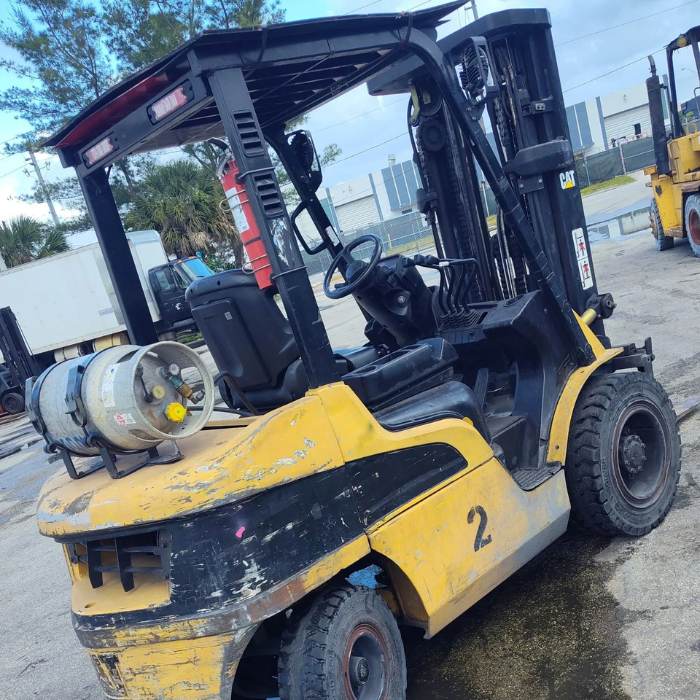
What Size Forklift Do I Need to Rent?
You need a forklift whose rated capacity comfortably exceeds the heaviest load you will lift, at the load center your cargo actually has. For most warehouses moving standard pallets, that means a unit in the 3,000 to 5,000 pound range.
Standout stat: Most everyday warehouse pallet work falls in the 3,000 to 5,000 pound capacity range, while heavier materials often call for 6,000 pounds or more.
A Quick Sizing Reference
- 3,000 to 4,000 lbs: light to medium pallets, retail stock rooms, small distribution spaces
- 5,000 to 6,000 lbs: dense pallets, beverage and building supplies, busy warehouse floors
- 8,000 lbs and above: steel, machinery, large equipment, and heavy industrial loads
Treat these as starting points. Your actual load weight, shape, and lift height decide the final answer.
Start With Your Heaviest Load, Not Your Average One
What weight should I use to choose a forklift size? Use the heaviest single load you expect to lift, not the average. A forklift that handles your typical pallet but struggles on your heaviest one is a safety problem waiting to happen.
Weigh a few representative loads if you can. A standard pallet of boxed goods may weigh well under a ton, while a pallet of tile, bagged concrete, or canned beverages can weigh far more than people expect. When in doubt, check shipping paperwork or put a pallet on a floor scale before you request a quote.
Why Load Center Changes Everything
What is load center on a forklift? Load center is the distance from the face of the forks to the center of gravity of your load. Most capacity ratings assume a standard load center, commonly 24 inches, and the rating drops as that distance grows.
"A forklift's rated capacity only applies at its stated load center. Change the load center and the real capacity changes with it."
This matters most for long, bulky, or awkward cargo. A load that sticks out farther than a standard pallet effectively shifts weight away from the truck, which reduces how much it can safely lift. The same goes for attachments and fork extensions, which can lower the usable capacity of the machine. Always check the data plate on the actual unit you rent, since it lists the capacity at specific load centers and with any attachments installed.
Matching Forklift Size to Common Load Types
Standard Pallets and Boxed Goods
For typical warehouse pallets of boxed products, a 3,000 to 5,000 pound unit usually covers the job. If your pallets are consistently dense, such as paper goods, bottled drinks, or packaged building materials, move toward the upper end of that range.
Heavy and Dense Materials
Steel stock, machinery, large motors, and stacked masonry can overwhelm a standard unit quickly. For these loads, look at higher capacity classes and confirm the rating at your real load center. Look through the available forklift rental sizes and capacities, then share the exact weight and dimensions with the provider so they can recommend a unit rather than guess.
Long and Oversized Loads
Lumber bundles, piping, rolled materials, and awkward oversized freight stretch the load center and lower effective capacity. Ask about the adjusted rating when forks are extended, and consider whether the right answer is a larger machine instead of simply adding extensions to a smaller one.
Drums, Bales, and Unpalletized Cargo
Cargo that does not sit on a pallet may need an attachment instead of, or alongside, a larger truck. Keep in mind that attachments reduce available capacity, so tell your rental provider about them up front.
Does Lift Height Affect Which Forklift You Need?
Yes. Lift height and mast type directly affect capacity, because raising a load higher reduces how much weight the truck can safely carry. If you stack pallets on high racking, tell the rental provider the maximum height you need to reach, not just the weight you need to lift.
A forklift that handles your pallet weight at ground level may not be rated for the same load at full height. Ask for the capacity at your actual lift height, and confirm the mast can clear doorways, low ceilings, or sprinkler lines in your building.
Choosing Size for Indoor vs. Outdoor Work
Should the environment change the size I rent? It often changes the type of forklift more than the capacity, but size and fit still matter. Indoor warehouses with tight aisles usually call for a compact, maneuverable unit, while outdoor yards, job sites, and uneven ground may need a larger truck with tires built for rough surfaces.
Think about turning radius, aisle width, and doorway clearance before you commit. A powerful unit that cannot fit down your aisle is no use to you. If you are weighing options across fuel type, capacity, and tires, browsing a provider's range of forklift sales and rentals can help you compare what is actually available for your site.
How Much Safety Margin Should You Build In?
How much extra capacity should I rent for? A common rule of thumb is to choose a forklift rated comfortably above your heaviest load, rather than one rated exactly at it. Many operators aim for a meaningful buffer so that a slightly heavier pallet, an off center load, or a bumpy surface does not push the machine past its limits.
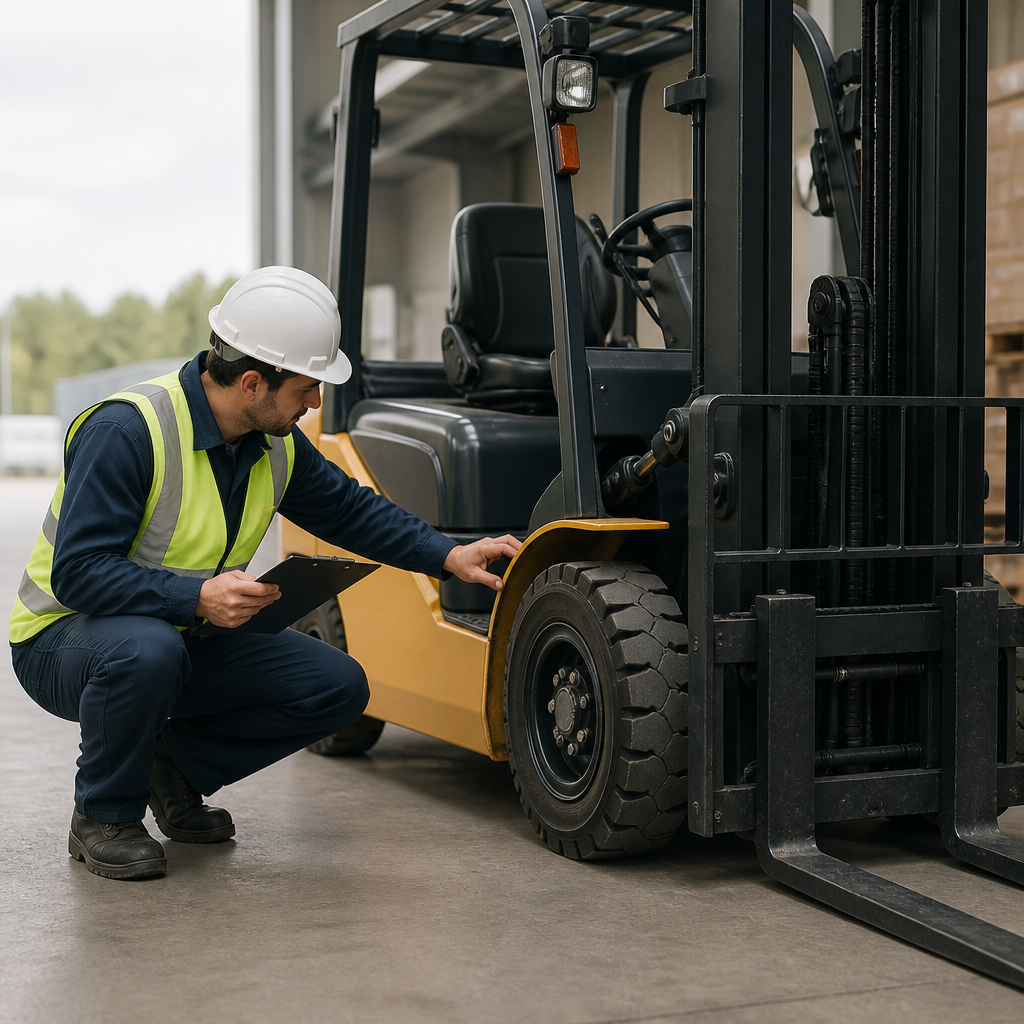
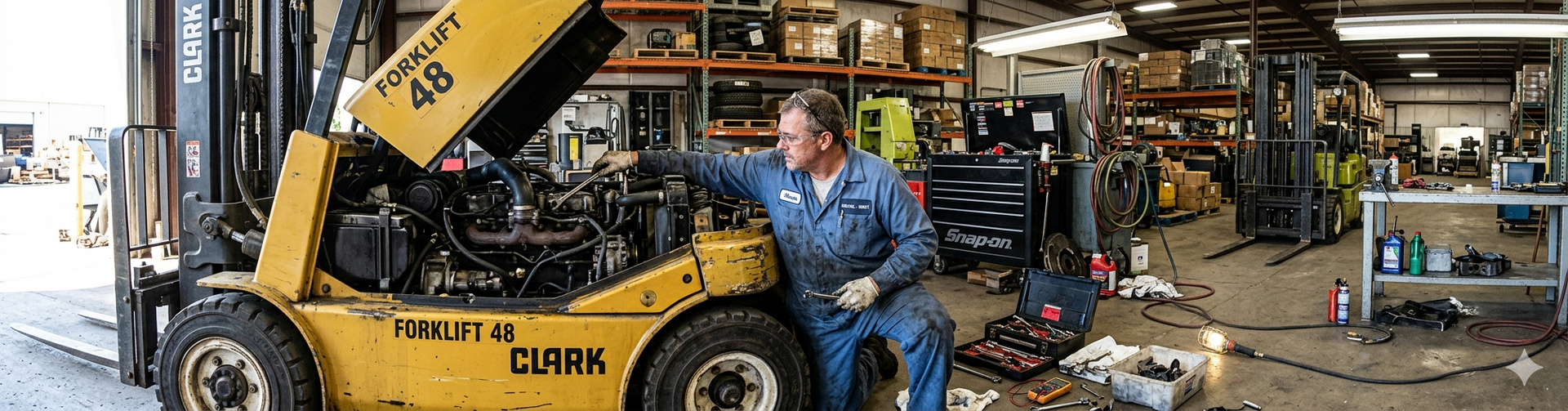
Rated capacity assumes the equipment is in good working order. Worn tires, weak hydraulics, and neglected components can all reduce real world performance, which is why upkeep matters even on a short rental. If you eventually move from renting to running your own fleet, forklift maintenance and repair services help keep rated capacity trustworthy over time.
Never exceed the capacity on the data plate, and never assume a bigger number on a different model applies to the unit in front of you.
Quick Sizing Checklist
Before you request a quote, gather the following:
- The weight of your heaviest load
- The dimensions of your largest load, including overhang
- The maximum height you need to lift to
- The width of your tightest aisle or doorway
- Whether the work is indoors, outdoors, or both
- Any attachments you plan to use
Handing this list to a rental provider makes it far easier for them to recommend the right unit quickly.
Key Takeaways
- Size your rental to the heaviest load you will lift, not the average one.
- Capacity ratings depend on load center, lift height, and attachments, so check the data plate.
- Most standard warehouse pallet work fits in the 3,000 to 5,000 pound range.
- Long, dense, or oversized loads usually need a higher rating or a different approach.
- Indoor aisle width and outdoor terrain affect fit as much as raw capacity.
- Build in a safety margin and never exceed the rated limit.
Conclusion: Get the Size Right Before You Sign
Figuring out what size forklift you need to rent comes down to a handful of honest measurements: your heaviest load, its real dimensions, how high you lift, and where the work happens. Get those right and the rest of the decision becomes straightforward.
When you request your quote, bring the checklist above and ask the provider to confirm the capacity at your actual load center and lift height. A few minutes of preparation up front protects your team, your product, and your budget from the cost of the wrong machine.