7 Signs Your Forklift Needs Immediate Repair (Before It Breaks Down)
Picture this: It's your busiest shipping day of the month, and your primary forklift suddenly grinds to a halt in the middle of your warehouse floor. The repair bill? Substantial. The productivity loss? Even worse. The frustrating part? Most forklift breakdowns don't happen without warning.
Your material handling equipment talks to you through various signals—fluid spots on the floor, unusual sounds, sluggish performance. Learning to recognize these forklift warning signs means the difference between a quick preventative repair and a costly emergency breakdown that derails your entire operation.
For warehouse managers and business owners across Miami-Dade and Broward County, understanding these critical indicators protects your workforce, preserves your equipment investment, and keeps your operations running smoothly. Let's explore the seven warning signs that demand immediate attention.
Why Does Recognizing Forklift Warning Signs Matter for Your Business?
Identifying forklift warning signs early prevents unexpected breakdowns that halt warehouse operations, protects worker safety, and saves money by avoiding emergency forklift repair costs. Regular attention to these indicators keeps your material handling equipment reliable and extends your lift truck's lifespan.
Consider the real costs: A minor hydraulic leak caught early might cost $200 to repair. That same leak, ignored for weeks, can destroy a $3,000 cylinder and sideline your forklift for days. Add rental equipment costs, lost productivity, and delayed shipments, and a preventable problem becomes a financial disaster.
Beyond dollars, operating damaged industrial equipment creates serious safety risks. OSHA takes forklift safety seriously, and for good reason—equipment failures cause injuries that are entirely preventable through proper maintenance and quick response to warning signs.
Key Takeaways
- Fluid leaks indicate system failures that worsen rapidly if ignored
- Unusual noises (grinding, squealing, knocking) signal mechanical problems requiring immediate diagnosis
- Steering difficulties or control problems compromise safety and demand immediate attention
- Power loss or performance decline reduces productivity and indicates developing failures
- Dashboard warning lights should never be dismissed—they're your forklift's direct communication
- Tire damage affects stability and creates tipping hazards
- Excessive vibration suggests structural or component wear that threatens safe operation
- Early intervention through professional repair always costs less than emergency breakdowns
Sign #1: Fluid Leaks Beneath Your Forklift
Walk around your parked forklift and check the floor underneath. See puddles or stains? That's your first critical warning sign.
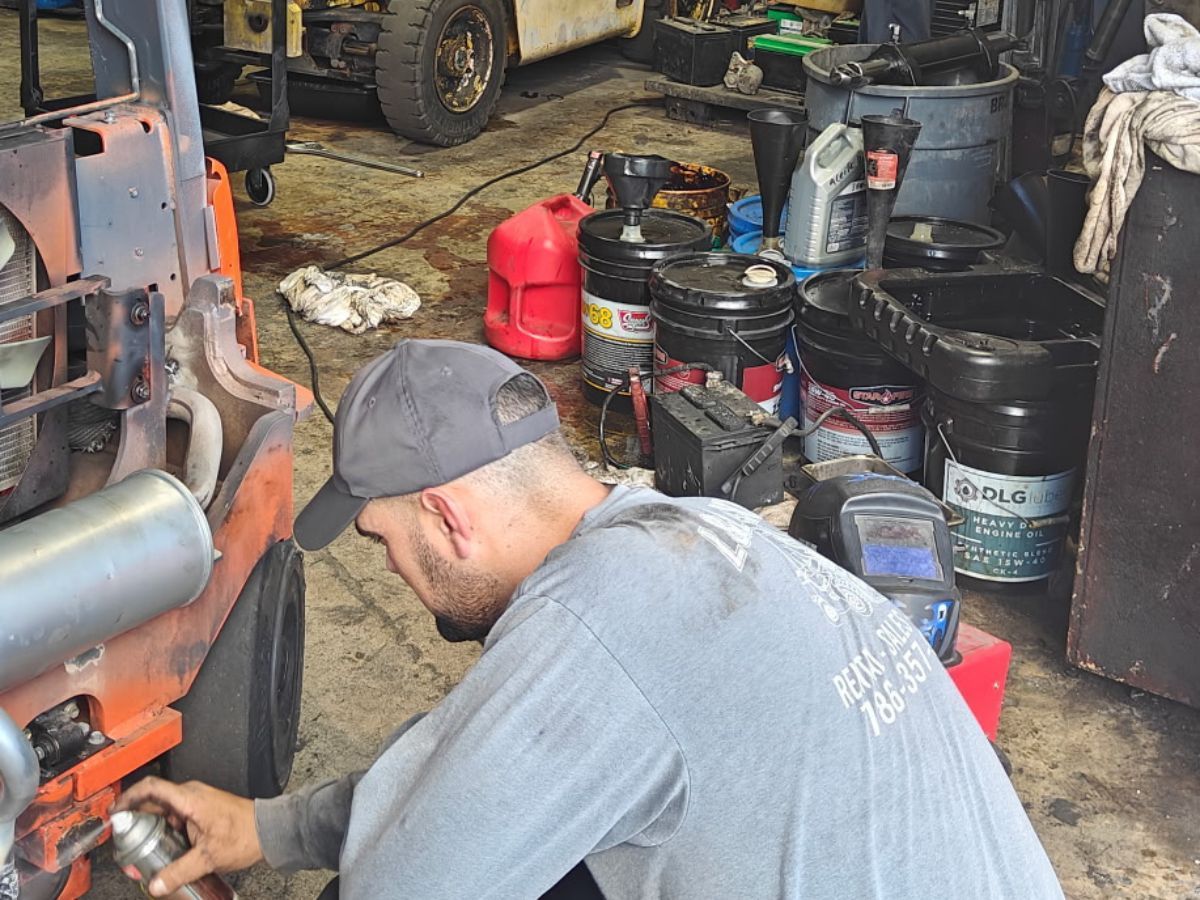
Different fluids indicate different problems. Reddish-brown spots suggest hydraulic fluid loss—the lifeblood of your lift system. Dark brown or black pools point to engine oil leaks. Green or orange puddles indicate coolant issues. Each fluid serves essential functions, and losing any of them compromises performance across propane, gas, and diesel forklifts alike.
Hydraulic leaks deserve special attention. Your lifting, tilting, and steering systems depend on proper hydraulic pressure. As fluid levels drop, these systems work harder, generating excessive heat that accelerates wear throughout the entire hydraulic circuit. What starts as a small seal failure can cascade into cylinder damage, pump failure, and complete system breakdown.
What to do: Stop using the equipment and call for a professional inspection. Continuing to operate with active leaks risks major component damage that multiplies repair costs.
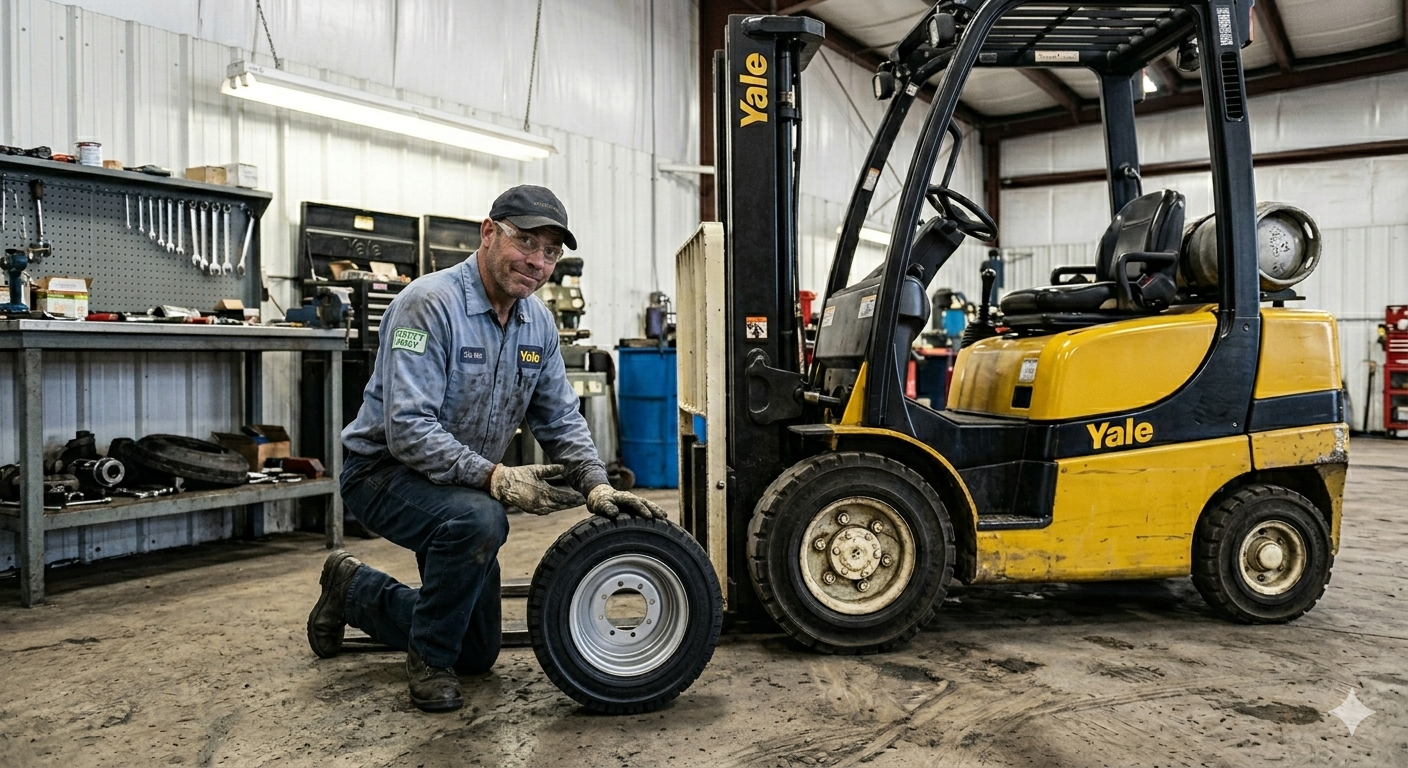
Sign #2: Damaged, Worn, or Improperly Inflated Tires
Your forklift's tires do more than move the machine—they're critical safety components that affect stability, load capacity, and operator control.
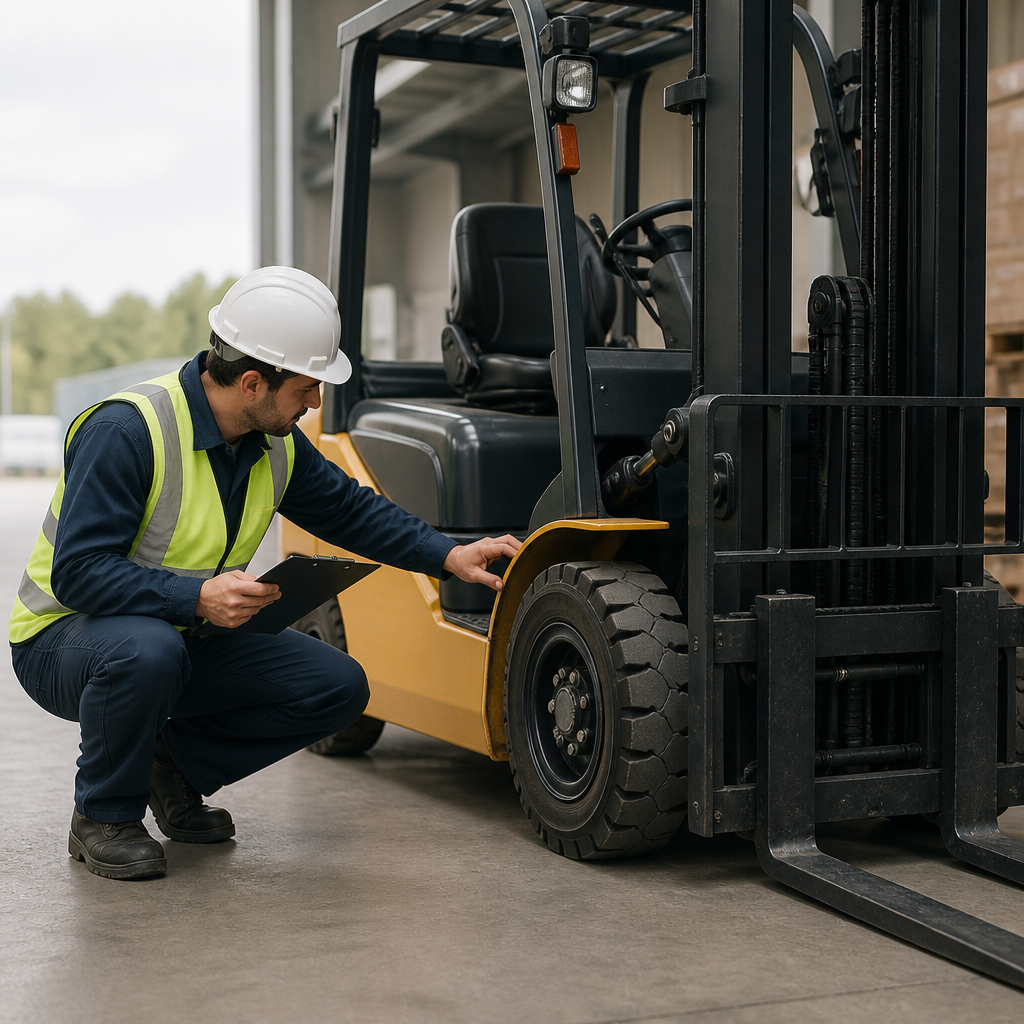
Inspect for uneven tread wear, visible cracks, chunks missing from the tire surface, or flat spots. These conditions reduce traction, create unpredictable handling, and increase tipping risks, especially when carrying loads. Pneumatic tires need proper inflation; cushion tires need adequate remaining material to maintain stability.
Worn tires also increase vibration transmitted through the machine, accelerating wear on other components like bearings, steering linkages, and mast assemblies. The secondary damage from bad tires often exceeds the tire replacement cost itself.
In South Florida's warehouse environment, where smooth concrete transitions to outdoor loading areas, tire condition directly impacts operational safety. One forklift tire failure during a loaded turn can create dangerous situations and expensive damage.
Sign #3: Strange Noises During Operation
Your ears are powerful diagnostic tools. Forklifts in good condition run relatively smoothly. New or unusual sounds signal developing mechanical problems.
Grinding or metal-on-metal scraping typically indicates brake wear, transmission issues, or bearing failures. These sounds mean components are literally destroying themselves during operation.
High-pitched squealing often points to belt problems, pulley misalignment, or bearing wear. While less immediately catastrophic than grinding, squealing indicates components operating outside normal parameters.
Knocking or banging suggests loose parts, engine problems, or hydraulic cylinder issues. This intermittent noise often worsens under load, signaling that critical components aren't functioning properly.
Hissing sounds indicate air or hydraulic leaks that reduce system pressure and efficiency.
The key question: Is this a new sound? Operators familiar with their equipment notice changes quickly. Trust those instincts—unusual noises warrant immediate professional evaluation before minor issues become major failures.
Sign #4: Steering or Control Problems
When your forklift doesn't respond predictably to steering inputs, you're facing both a safety hazard and a clear indicator of needed repairs.
Warning signs include excessive play in the steering wheel, difficulty turning or unresponsive steering, drifting to one side without input, or jerky and inconsistent movements. These symptoms suggest problems ranging from low hydraulic fluid to worn steering components, damaged cylinders, or control valve issues.
Impaired steering creates immediate safety concerns. Warehouse environments demand precise maneuvering around racking, pedestrians, and other equipment. A forklift that doesn't go exactly where intended risks collisions, tip-overs, and injuries.
Beyond safety, steering problems frustrate operators and slow productivity. Tasks that normally take seconds require extra time and attention, multiplying throughout shifts and across your fleet.
If you notice steering changes, remove the equipment from service immediately and arrange for a professional diagnosis. The underlying causes typically worsen rapidly, and the gap between "manageable problem" and "complete failure" closes quickly.
Sign #5: Loss of Power or Performance Issues
Does your forklift feel sluggish? Take longer to accelerate? Struggle with loads it previously handled easily? Performance decline rarely happens overnight—it's a gradual process that operators notice first.
Common performance warning signs include sluggish acceleration or reduced travel speed, difficulty lifting normal loads or reduced lifting capacity, engine stalling or rough idling, decreased maximum lifting height, and extended cycle times for routine tasks.
For propane forklifts, performance issues might indicate regulator problems or contaminated fuel supply. Diesel systems can suffer from fuel filter clogging, injector problems, or air intake restrictions. Gas-powered units might face carburetor issues or ignition system degradation.
Here's why performance matters beyond obvious productivity loss: Struggling equipment works harder to accomplish basic tasks. That extra strain accelerates wear on engines, transmissions, hydraulic pumps, and electrical systems. A forklift operating at 80% capacity experiences disproportionately higher component stress, shortening overall equipment life.
Track your fleet's performance. When a forklift that normally completes 30 cycles per hour drops to 25, that 17% reduction signals developing mechanical issues requiring professional attention.
Sign #6: Dashboard Warning Lights and Electrical Issues
Modern forklifts include sophisticated warning systems designed to alert operators before minor issues become major failures. Ignoring these warnings defeats their entire purpose.
Take dashboard lights seriously. Engine or check engine lights, oil pressure warnings, temperature alerts, and battery or charging system indicators all demand immediate investigation. These aren't suggestions—they're urgent notifications that critical systems are operating outside safe parameters.
Electrical problems extend beyond dashboard lights. Flickering lights or complete light failure compromise visibility and safety. Non-functional horns or backup alarms violate OSHA requirements and create hazardous conditions. Intermittent power loss suggests loose connections, failing alternators, or battery issues. Corroded battery terminals reduce charging efficiency and starting reliability.
Electrical issues often indicate deeper problems. A charging system warning might reveal alternator failure, but it could also signal excessive electrical draw from a failing component elsewhere in the system. Professional diagnosis identifies root causes rather than addressing symptoms.
For material handling operations in Miami-Dade and Broward County, electrical system reliability isn't optional—it's essential for maintaining the productivity your business depends on.
Sign #7: Unusual Vibrations or Unstable Operation
Excessive vibration during forklift operation isn't normal, and it's not something operators should "get used to." It signals mechanical problems requiring immediate attention.
Notice whether vibration occurs during travel, lifting, lowering, or all operations. Shaking during travel might indicate tire problems, wheel bearing wear, or drivetrain issues. Vibration when lifting or lowering loads suggests hydraulic cylinder problems, worn lift chains, or mast component wear. Unstable mast movement or side-to-side wobbling indicates serious structural or mounting concerns.
Vibration accelerates wear throughout the machine. It loosens fasteners, damages seals, stresses welds, and fatigues components. A forklift vibrating excessively ages much faster than one operating smoothly, even if both handle similar workloads.
From a safety perspective, vibration creates instability that increases tipping risks, especially when handling loads at height. It also fatigues operators, reducing alertness and reaction time during shifts.
If your forklift develops new or worsening vibration, schedule professional inspection immediately. The underlying causes rarely improve on their own and typically deteriorate until component failure forces emergency repairs.
What Should You Do When You Notice These Warning Signs?
Stop operation if safety is compromised. Steering problems, brake issues, unstable mast movement, or severe leaks demand immediate shutdown. Tag out the equipment to prevent use until inspection confirms it's safe.
Document what you've observed. Note specific symptoms, when they occur, and any patterns. This information helps technicians diagnose problems efficiently. Photos of leaks, damaged components, or warning lights provide valuable diagnostic context.
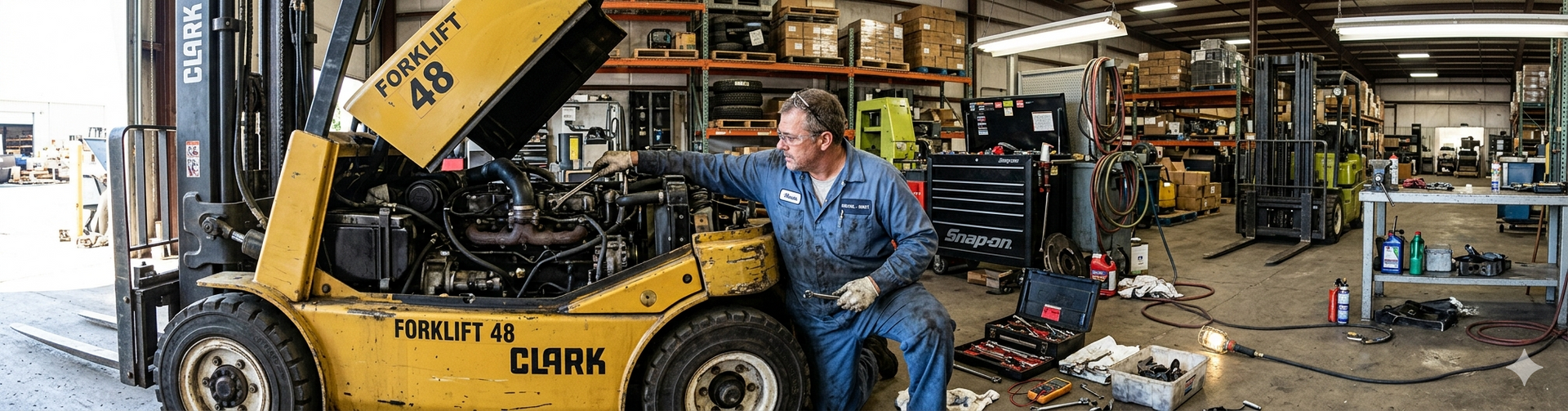
Contact professional forklift repair services. Experienced technicians diagnose root causes rather than merely addressing symptoms. They have specialized tools, manufacturer training, and parts availability to restore your equipment properly. Same-day service minimizes operational disruption while ensuring repairs meet safety and performance standards.
For businesses throughout Miami-Dade, Broward County, and Key West, mobile repair services bring expertise directly to your location, reducing downtime and keeping material handling operations on schedule.
Don't delay. Small problems become expensive failures when ignored. The gap between "needs attention soon" and "completely broken" closes faster than most people expect, especially with industrial equipment operating in demanding warehouse environments.
Preventative Maintenance: Your Best Defense
While recognizing warning signs prevents breakdowns, regular preventative maintenance prevents warning signs from appearing in the first place.
Implement daily operator inspections covering fluid levels, tire condition, safety features, and visible damage. Weekly maintenance should include more detailed checks of hydraulic systems, electrical components, and operational performance. Monthly professional inspections provide comprehensive system reviews by trained technicians who spot developing issues before operators notice symptoms.
Annual major service addresses wear items proactively and maintains manufacturer warranties where applicable. For businesses operating multiple forklifts, scheduled maintenance programs spread costs predictably while maximizing equipment reliability and lifespan.
In South Florida's climate, additional attention to heat and humidity effects on hydraulic fluids, battery maintenance in hot conditions, and corrosion prevention in coastal environments protects your equipment investment.
Don't Let Warning Signs Become Breakdowns
The seven forklift warning signs we've covered—fluid leaks, tire damage, unusual noises, steering problems, power loss, electrical issues, and excessive vibration—are your equipment's way of asking for help before complete failure forces the issue.
Smart warehouse managers and business owners recognize these indicators and respond quickly with professional repair services. That proactive approach protects workers, preserves equipment value, minimizes operational disruption, and ultimately costs far less than emergency breakdowns.
Your material handling equipment is essential to your business operations. When you notice any of these forklift warning signs, don't wait and hope the problem resolves itself—it won't. Quick professional intervention keeps your warehouse running smoothly and safely.
Experiencing any of these warning signs with your forklift fleet? L&L Forklift & Equipment Repair provides same-day service throughout Miami-Dade, Broward County, and Key West. Our experienced technicians service all major brands and fuel types—propane, gas, and diesel—with mobile repairs that come directly to your location. With over 24 years serving South Florida businesses, we understand that reliable material handling equipment isn't optional for your operation.
Call 786-357-9796 today for fast, professional forklift repair that minimizes downtime and maximizes safety. Whether you need emergency repairs, preventative maintenance, or comprehensive fleet service, we deliver the expertise and responsiveness your business demands.