Buying a Used Forklift: 10 Things to Inspect Before You Pay
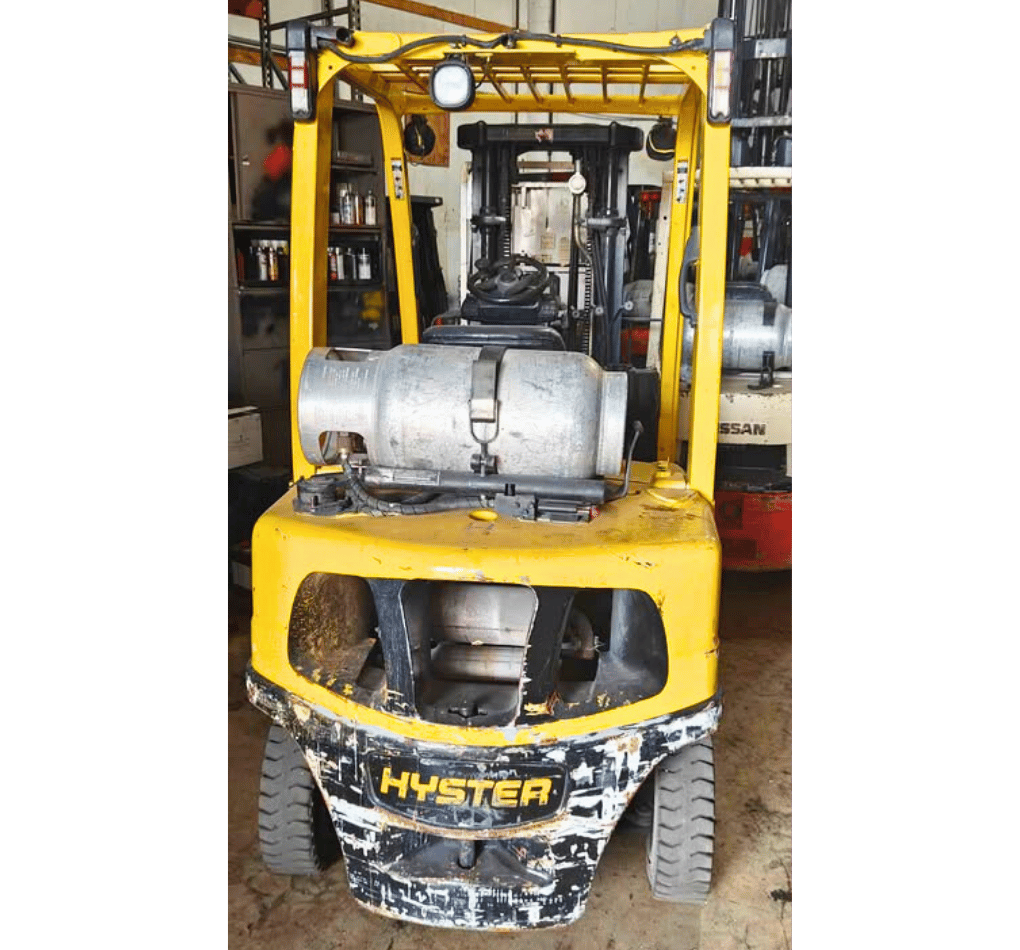
Buying a used forklift can save your business thousands of dollars compared to purchasing new, but only if you know what you are looking at. A forklift that looks fine on the surface can be hiding worn hydraulics, a cracked fork, or a mast that is one bad lift away from failure. Before you hand over a check, walk through this inspection checklist so you know exactly what you are paying for.
Whether you are a warehouse manager expanding your fleet or a small business owner browsing
used forklifts for sale for the first time, these ten checkpoints will help you avoid an expensive mistake and negotiate a fair price with confidence.
Why a Pre-Purchase Forklift Inspection Matters
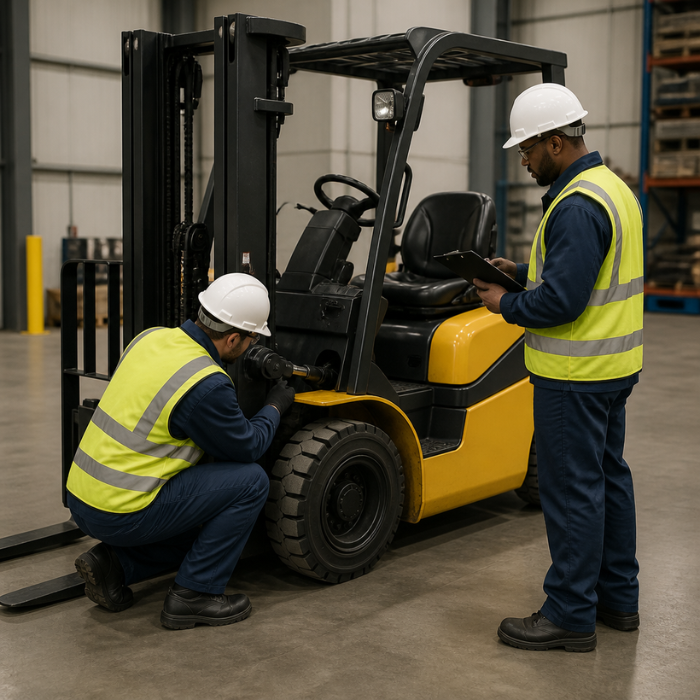
A used forklift with an unnoticed defect can cost you two to three times its purchase price in repairs and lost productivity within the first year. Sellers are not always trying to deceive you, but normal wear can hide real problems until the equipment is already on your property. A structured inspection protects your investment and gives you leverage to negotiate the price down if issues turn up.
1. Check the Hour Meter and Usage History
What is a good number of hours on a used forklift? Most forklifts are built to run reliably for 10,000 to 20,000 hours with proper maintenance, so a machine under 10,000 hours with documented service is generally a safer bet.
Ask the seller for the hour meter reading and compare it to the machine's age. A forklift with unusually low hours for its age might have a replaced or tampered meter, so cross check the number against maintenance records and the general condition of wear parts like pedals, seat, and steering wheel.
2. Inspect the Forks for Cracks, Bends, and Wear
How do you tell if forklift forks are unsafe? Unsafe forks typically show visible cracks near the heel, uneven length between the two forks, or heel wear exceeding 10 percent of the original thickness.
Run your hand along the top and bottom of each fork looking for hairline cracks, and use a tape measure to confirm both forks are the same length. Mismatched or worn forks affect load capacity and stability, and replacing them is not cheap, so factor this into your offer.
3. Examine the Mast and Lift Chains
What signs of mast or chain wear signal costly repairs? Rust, uneven links, or a mast that lifts unevenly usually points to chain stretch or cylinder problems that require professional attention.
Cycle the mast up and down while watching for jerky movement, unusual noise, or one side lifting faster than the other. Chains should move smoothly with no visible rust pitting or loose links. If the forklift has a side shift or fork positioner, test those functions too since hydraulic attachments are another common failure point on used equipment.
4. Check for Hydraulic Fluid Leaks
Is a small hydraulic leak a dealbreaker? A minor weep around a fitting is often a simple fix, but active dripping or a puddle under the machine usually signals a worn seal or cylinder that needs repair before the forklift goes back into service.
Look underneath the truck and around the lift cylinders, hoses, and fittings for fresh fluid. Ask when the hydraulic fluid was last changed, since old or contaminated fluid accelerates wear on the pump and valves.
5. Test the Tires for Wear and Type Match
Tires affect stability, traction, and ride quality, and the right type depends on where the forklift will actually work.
Solid vs. Pneumatic Tires: What to Check Before Buying
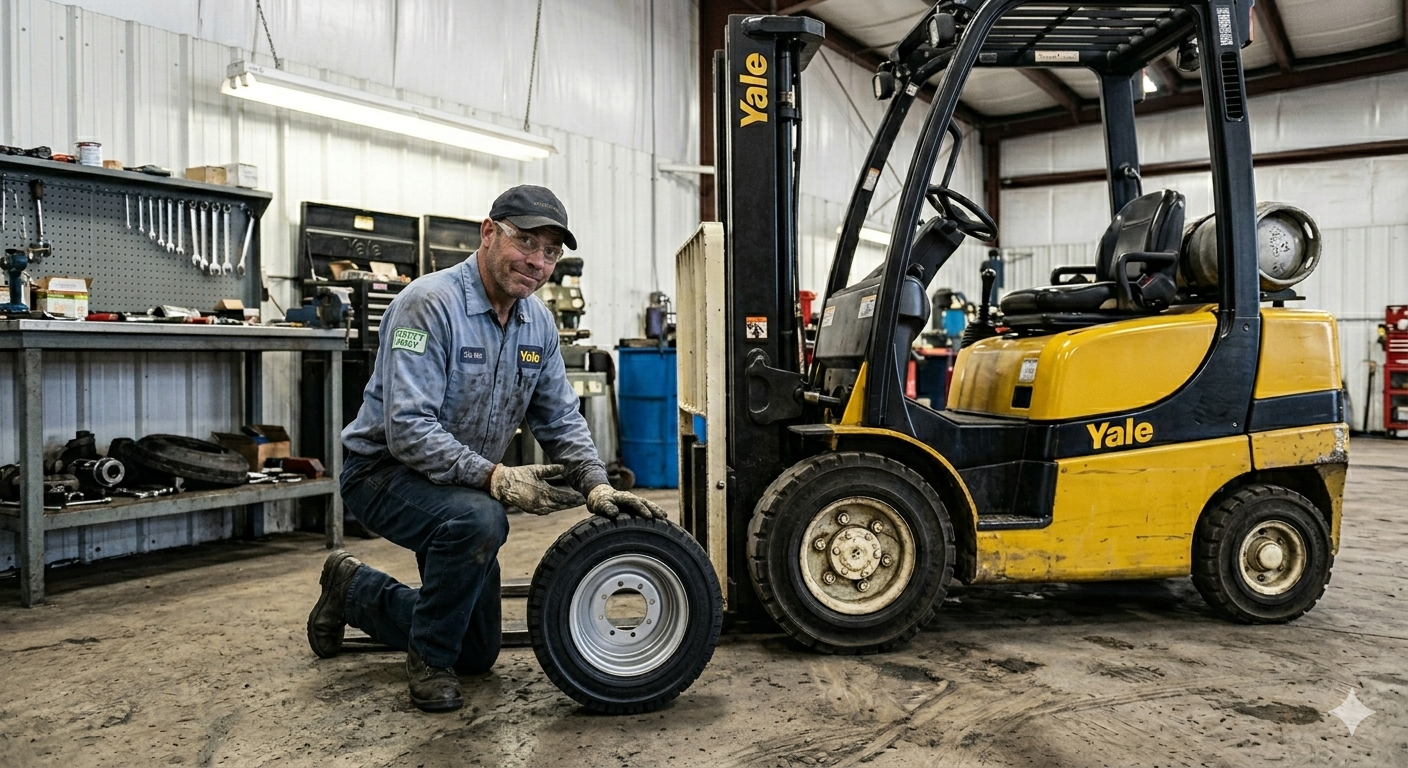
Solid tires are common for indoor warehouse use, while pneumatic tires handle rough or outdoor terrain better. Inspect for chunking, flat spots, and uneven wear that could indicate alignment or suspension issues, and confirm the tire type matches the environment you plan to use it in.
6. Review Engine or Battery Condition by Fuel Type
Power source condition varies significantly depending on whether the forklift runs on electricity, propane, gasoline, or diesel.
What Should You Check on an Electric Forklift Battery Before Buying?
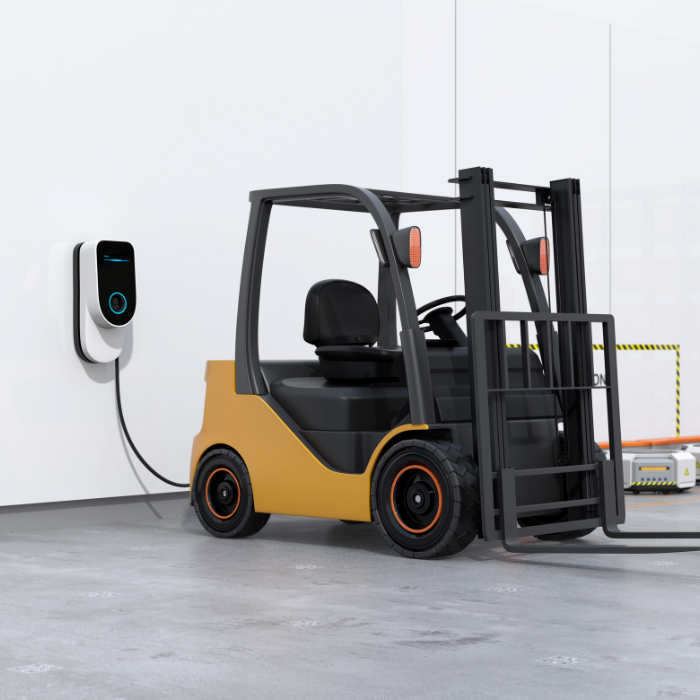
Check the battery's age, watering history, and voltage under load, since a battery nearing the end of its life can cost nearly as much to replace as a used forklift itself. Ask for recent load test results if available, and look at the battery casing for corrosion or swelling.
What Should You Check on a Propane, Gas, or Diesel Engine Before Buying?
Start the engine cold if possible and listen for knocking, excessive smoke, or rough idle, all of which suggest internal wear. Check fluid levels, belt condition, and whether the engine has any recent maintenance documentation.
7. Inspect the Brakes and Steering
How do you test forklift brakes during an inspection? Drive the forklift at a low, controlled speed and apply the brakes firmly to confirm it stops smoothly without pulling to one side or requiring excessive pedal pressure.
Also turn the steering wheel fully in both directions while stationary and while moving slowly. Excessive play in the steering or a delayed response often points to worn linkage or hydraulic steering components.
8. Check for Rust and Structural Damage on the Frame
Why Frame Rust Matters More Than Cosmetic Wear
Surface rust on the paint is cosmetic, but rust or cracking on the frame, overhead guard, or counterweight can compromise structural integrity and safety. Inspect welds and load-bearing areas closely, and walk away from any machine with visible frame cracks or repairs that look improvised rather than professionally done.
9. Ask for Maintenance and Repair Records
A seller who maintains detailed records is usually a seller who took care of the equipment. Request service logs, past repair invoices, and any inspection certificates, and pay close attention to how often major components like the transmission, hydraulic system, or battery have needed attention. If those records are thin, our forklift inspection and repair services team can help fill in the gaps before you commit.
Frequent repairs to the same system are a red flag worth factoring into your offer.
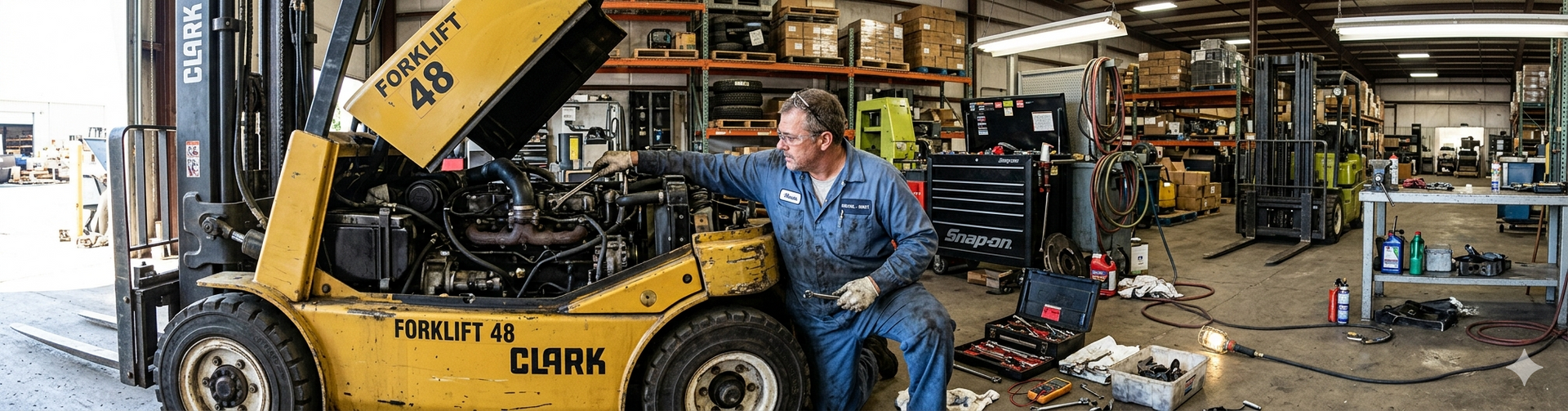
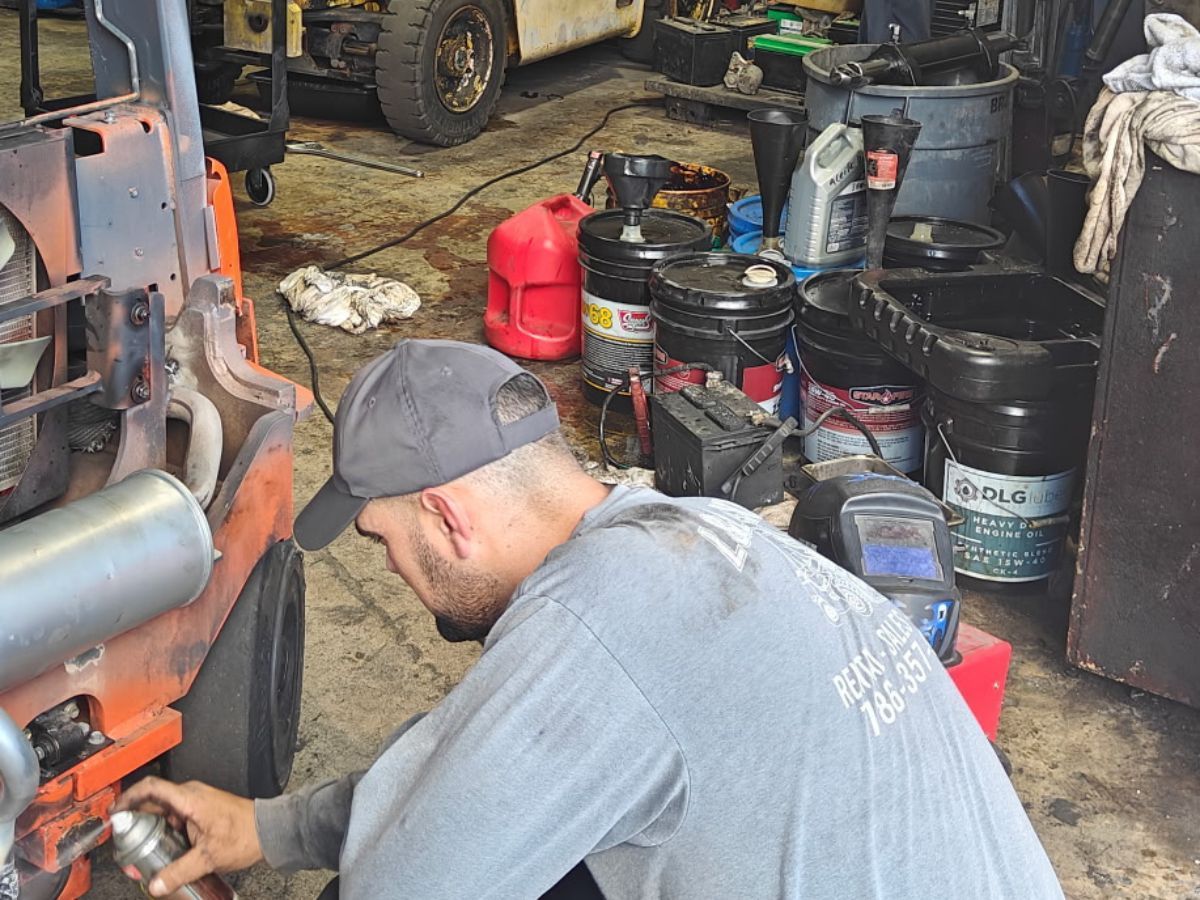
10. Get a Pre-Purchase Inspection From a Licensed Technician
Is it worth paying for a professional inspection before buying a used forklift? Yes. A licensed technician can catch hidden issues in the hydraulic system, transmission, and electrical components that are easy to miss during a visual walkthrough, often for far less than the cost of a surprise repair after purchase.
Having a technician run a pre-purchase inspection is one of the smartest moves you can make before finalizing a deal, since it turns guesswork into a clear, honest picture of the machine's true condition. If you're exploring options, visit a reputable forklift provider such as Forklift Luis to see how we can help with repairs, rentals, and used equipment across South Florida.
Key Takeaways
- Compare hour meter readings against the machine's age and maintenance history
- Inspect forks for cracks, bends, and uneven wear
- Check the mast and chains for smooth, even movement
- Look closely for hydraulic leaks around cylinders and fittings
- Match tire type to your working environment and check for uneven wear
- Evaluate battery or engine condition based on fuel type
- Test brakes and steering for responsiveness and play
- Check the frame and overhead guard for rust or structural damage, not just cosmetic wear
- Request full maintenance and repair records from the seller
- Get a professional pre-purchase inspection before you finalize the sale
Final Thoughts
Buying a used forklift is one of the more cost-effective ways to grow your fleet, but only when you know what to look for before you pay. Working through these ten checkpoints, from the hour meter to the frame to the maintenance records, helps you avoid costly surprises and negotiate from an informed position.
If you want a second set of eyes before you commit to a purchase,
contact our forklift technicians for a professional inspection.